https://www.scientificamerican.com/article/mitochondrial-mutations-b/
What role do mitochondria play in cells, and why is their DNA (mtDNA) important?
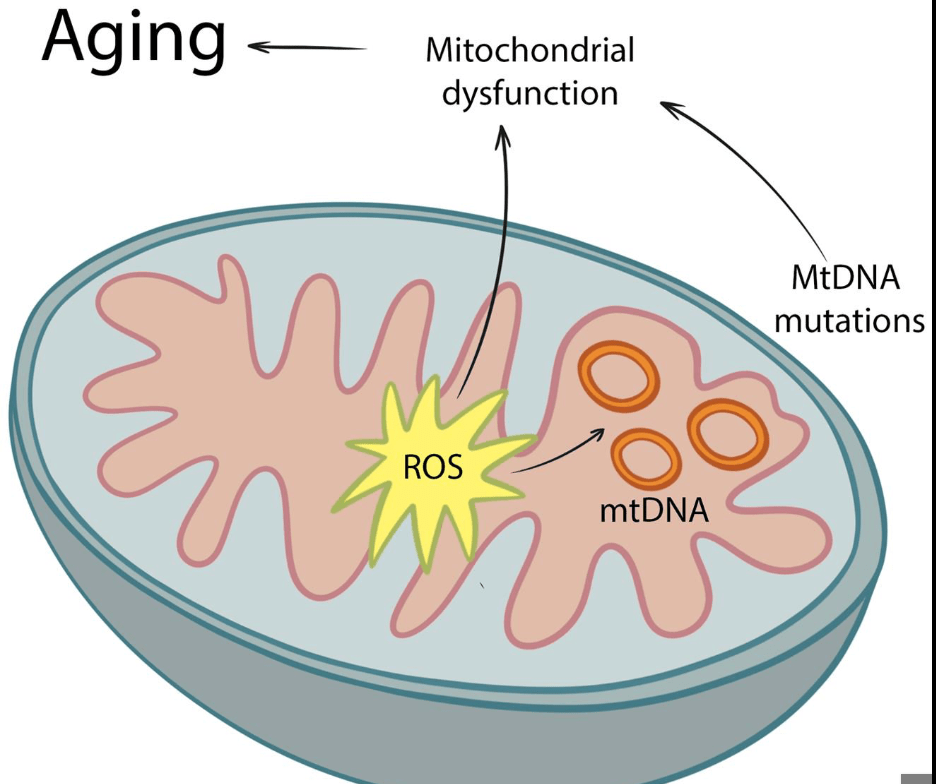
Mitochondria are the cell’s energy converters and have their own DNA.
In the experiment described, how did researchers modify the mice to produce more mitochondrial DNA errors?
They were modified to carry a compromised version of an enzyme which proofreads mitochondrial DNA.
What were the main signs of premature aging observed in the genetically modified mice?
Hair loss, heart problems, reduced fertility.
How did the lifespans of those mice compare to normal mice, according to the article?
They lived less than 60 weeks. Normal mice live 100 weeks on average.
Why did scientists consider this experiment as more than just a “correlation” between mitochondrial mutations and aging?
It is the first noncorrelative evidence that mitochondrial mutations cause aging.
What future experiments or interventions do the authors suggest could arise because of this finding?
Future experiments using the prematurely aged mice can study how growing old can be counteracted by genetical, pharmacological, or dietary methods.
What limitations or caveats are mentioned about attributing aging solely to mitochondrial mutations?
The DNA the scientists compromised is just one of several molecules that may be related to aging.
According to the article, why might improving mitochondrial DNA repair or proofreading be a promising avenue for extending life?
It could assist scientists when studying how they could counteract aging.
How does this research change or support our understanding of the biological processes underlying aging?
mitochondrial mutations can cause aging.
If you were to design a follow-up study to test whether enhancing mitochondrial DNA repair can delay aging, briefly outline your experimental approach (animal or cellular model, what you’d measure, etc.).
I would enhance the mitochondrial polymerase’s ability to proofread and repair DNA (if that’s possible) and compare the lifespan of normal mice with that of modified mice.


Leave a Reply